


17 Nov Lunch Talk: (Re)launching your reader-supported newsletter as an independent journalist | Lunch Talks
How can you build a portfolio of written work online? Gain a readership? Navigate the possibilities and demands that come with offering paid subscriptions?
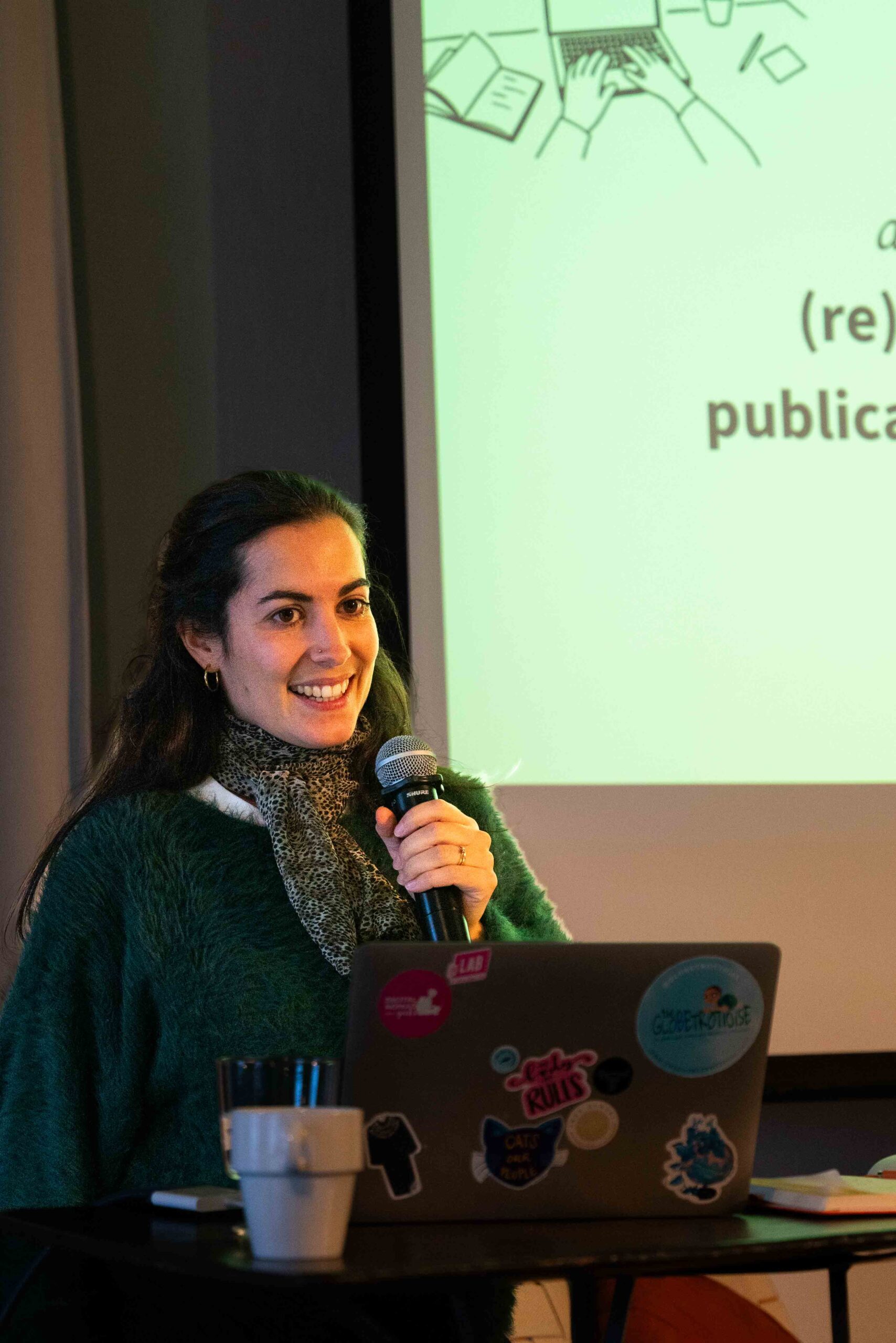
Ely Bakouche, a digital publishing strategist, helped us work through these questions in her lunch talk on Tuesday 10 November, hosted by the Gothenburg Media Hub. She runs The Ligthouse Library, a learning space where she shares essays, ideas and tools to help writers publish their works.
Ely began her session by bursting four persistent myths in the world of newslettering:
- “You need 3,348 followers to put on a paid subscription” – to Ely, there’s more to running a “successful” newsletter than mere numbers. Rather that making it a numbers game, you should focus on developing a clear goal and purpose, since this is ultimately what people will be paying for.
- “Going paid means chucking out more and more content” – People don’t pay for the quantity of your work, she said, they pay for its quality and depth of thought.
- “If my publication is good, readers will pay for it” – We live in a loud digital space and the most important thing is to stand out and differentiate yourself from other platforms. People need to be reminded why they should pay for your work.
- “A weekly pace is a necessary evil” – For Ely, good writing comes with good thinking, which doesn’t always keep a weekly schedule. She’s not against the weekly pace per se, but wants people to know that it comes with trade-offs in providing limited space for deep thinking.
She followed up by sharing four key elements she believes writers need to consider to build a publication with meaning and purpose. Her key message is that an idea is a product worth paying for.
1. Your publication must have a purpose. This is your anchor that helps you keep up momentum, informs your writing and selling decisions, and helps define the rest of your editorial line.
2. Thinking deeply about who your readers are will help you draw their attention by reflecting on what they’re eager to learn about and discover.
3. Your opinion – what you believe in, why you do it, and what you want to make visible – is the beating heart of your publication. When paired with your angle, it’s also what makes you stand out. Think along the lines of “everyone is talking about X, why is nobody talking about Y?”
4. Your angle – your unique approach and perspective – is often the most static part of your writing but also the most important to draw readers. An example is not just “looking at cities through the climate lens” but rather “looking at grassroots movements in the city through the SDG 11 lens that focuses on inclusivity, safety, resilience and sustainability”.
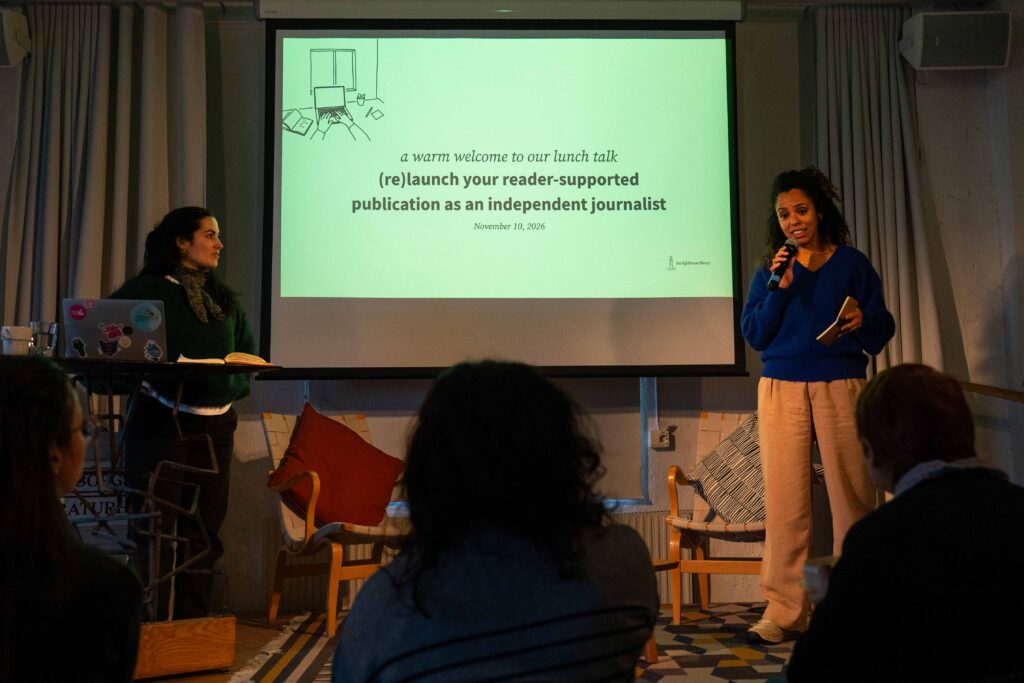
The talk ended with engaging discussions stemming from audience questions. One query which resonated with many was how to navigate the fear of making mistakes or not having sufficiently thought-out ideas. Here, Ely suggested to try dividing between fresh takes and texts with a longer shelf-life, and for the latter incorporating an editor into the process.
Another question was which platform is best. The answer Ely offered was that it depends on your goals. If you want to make it easier to pitch to outlets or have conversations with editors, then you’ll want to have your writing on a publicly-accessible platform. For this, Substack is popular, but there’s also the European-based alternative Steady. If you want something more intimate, then a newsletter is a better fit.
